Your Dashboard Showed Nine Things. It Did Not Show Which One Mattered.
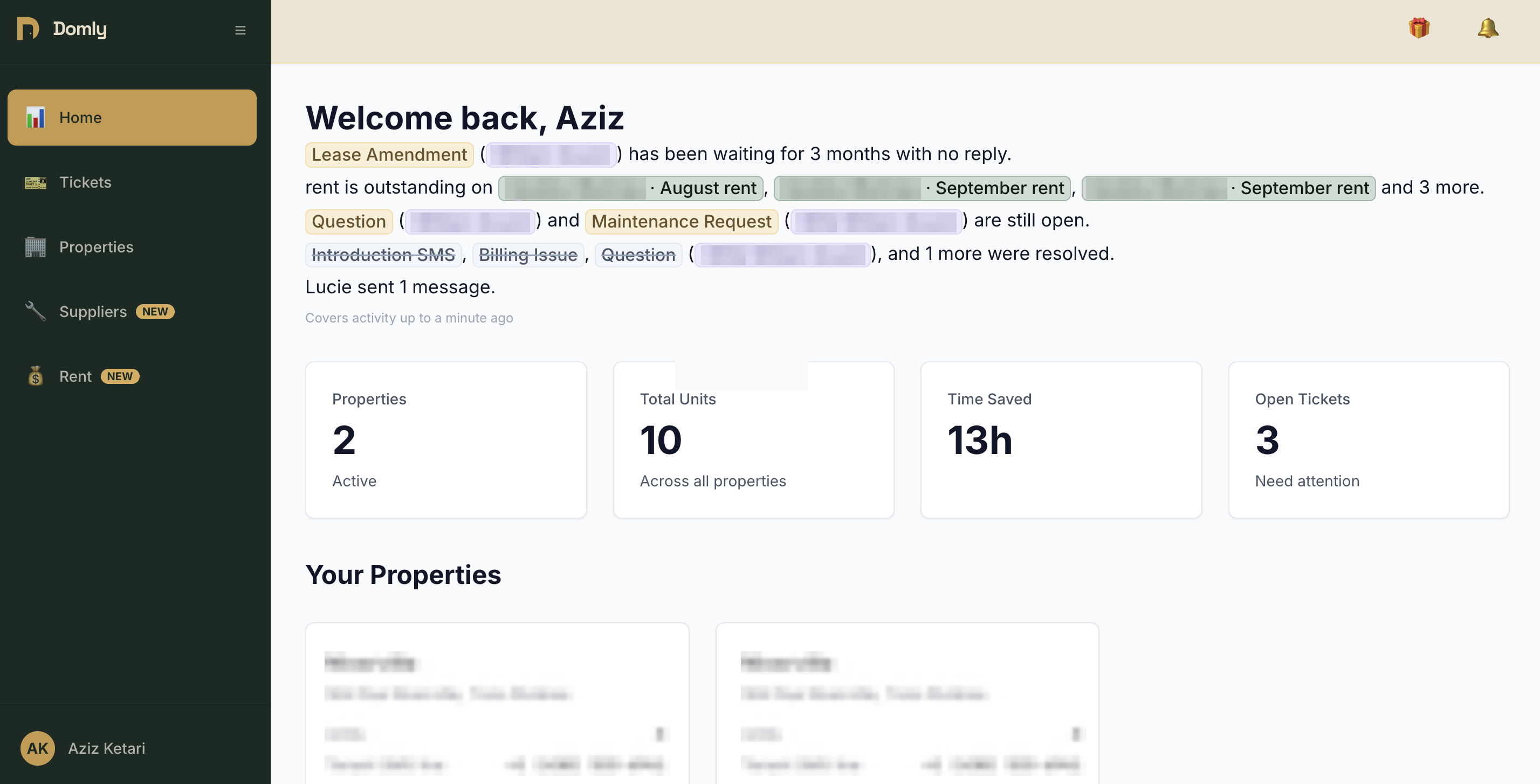
Until this week, the first thing you saw when you opened Domly was a list. Everything waiting on you, ordered sensibly: open jobs, quotes to approve, rent that had not arrived. It looked organised, and organised is not the same as useful.
Here is the problem with a list, and it took us a while to see it. A list is very good at telling you how much is waiting. It is almost incapable of telling you what matters. Every row is the same height, the same shape and the same weight, so nine things that need you look exactly like nine things that do not.
One of our own accounts made it obvious. Two tenants were behind on rent. One of them owed two thousand five hundred dollars across three months. The other was short by a hundred and two — somebody underpaying by about thirty dollars a month, probably without noticing. On the dashboard they were two identical rows. You could not tell the real problem from the rounding error without opening both.
So the list is gone. In its place is a short written brief — a few sentences about what needs you today, the way a good assistant would leave it on your desk. Not an inventory. An answer.
The part we are most pleased with is that the things it names are clickable. When the brief mentions a tenant, that tenant's name is a link to their file. When it mentions a repair, the repair's own title is a link to the ticket. When it mentions rent, you land on the rent. If you have used Asana or Linear, you already know the feeling: you read a sentence and you click the thing inside it, instead of reading a sentence and then going to find the thing.
It only changes when something actually changes. Resolve a job and it updates. Rent lands and it updates. Nobody writes in overnight and it says the same thing in the morning, because nothing happened and pretending otherwise would just train you to stop reading it.
The bell is going too. A counter that tells you there are four unread things is a count, not information, and it makes you open the dashboard to find out whether any of them were worth opening it for. The brief should already have told you.
The test we are holding this to is simple. You should be able to open Domly, read one short paragraph, and know whether you need to do anything today. If you still have to go and look, we have not finished.
Ready to let AI handle your tenant messages?
Start free with Domly